Kuwaiba — Enterprise Network Inventory for Telecom Operators
Model, understand and control complex telecom networks with full technological independence.
Kuwaiba is an open-source, enterprise-grade platform that enables operators to manage physical and logical assets, preserve control over operational data, and avoid vendor lock-in.

What Kuwaiba Solves
Data Control & Sovereignty
Your information and business logic remain in your infrastructure. Avoid lock-in and keep full control.
Real Integration with Your Ecosystem
Open APIs, north/south interfaces, and a modular architecture to coexist with OSS/BSS, CRM, and EMS/NMS.
Operational Efficiency
End-to-end visibility, fewer errors, and the ability to automate key workflows and tasks.
Key Capabilities
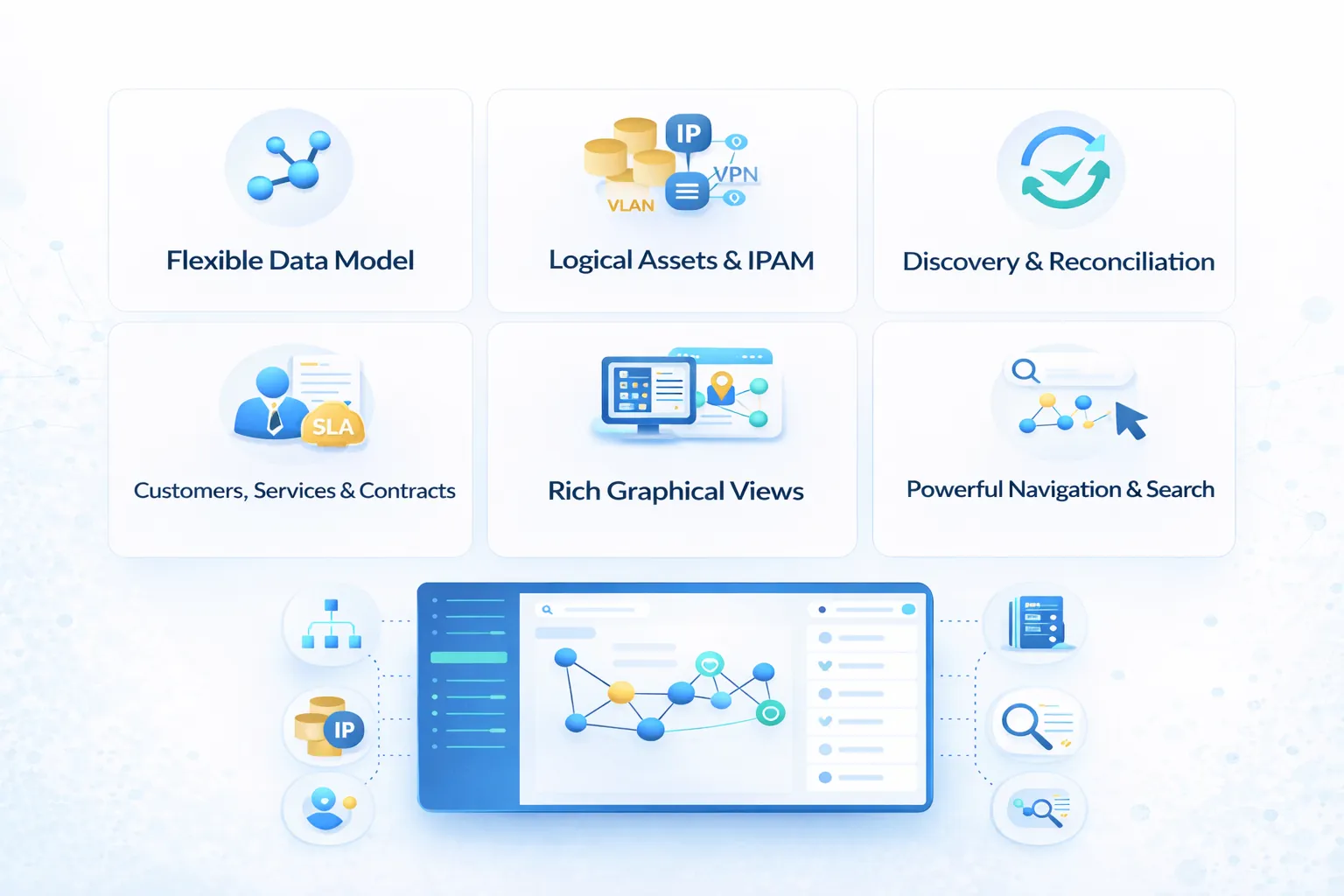
- Flexible data model: Adapts to new technologies and business models without rewriting the platform.
- Logical assets & IPAM: IPs, VLANs, VPNs, tunnels, and circuits from a coherent interface.
- Discovery & reconciliation: Keep the inventory aligned with the real network through synchronization and rules.
- Customers, services & contracts: Unified B2B/B2C view, SLAs, and associated resources for full context.
- Rich graphical views: From room and rack to physical paths and geographic maps — everything connected.
- Powerful navigation & search: Explore relationships, filter properties, and execute actions from the explorer.
Views & Exploration
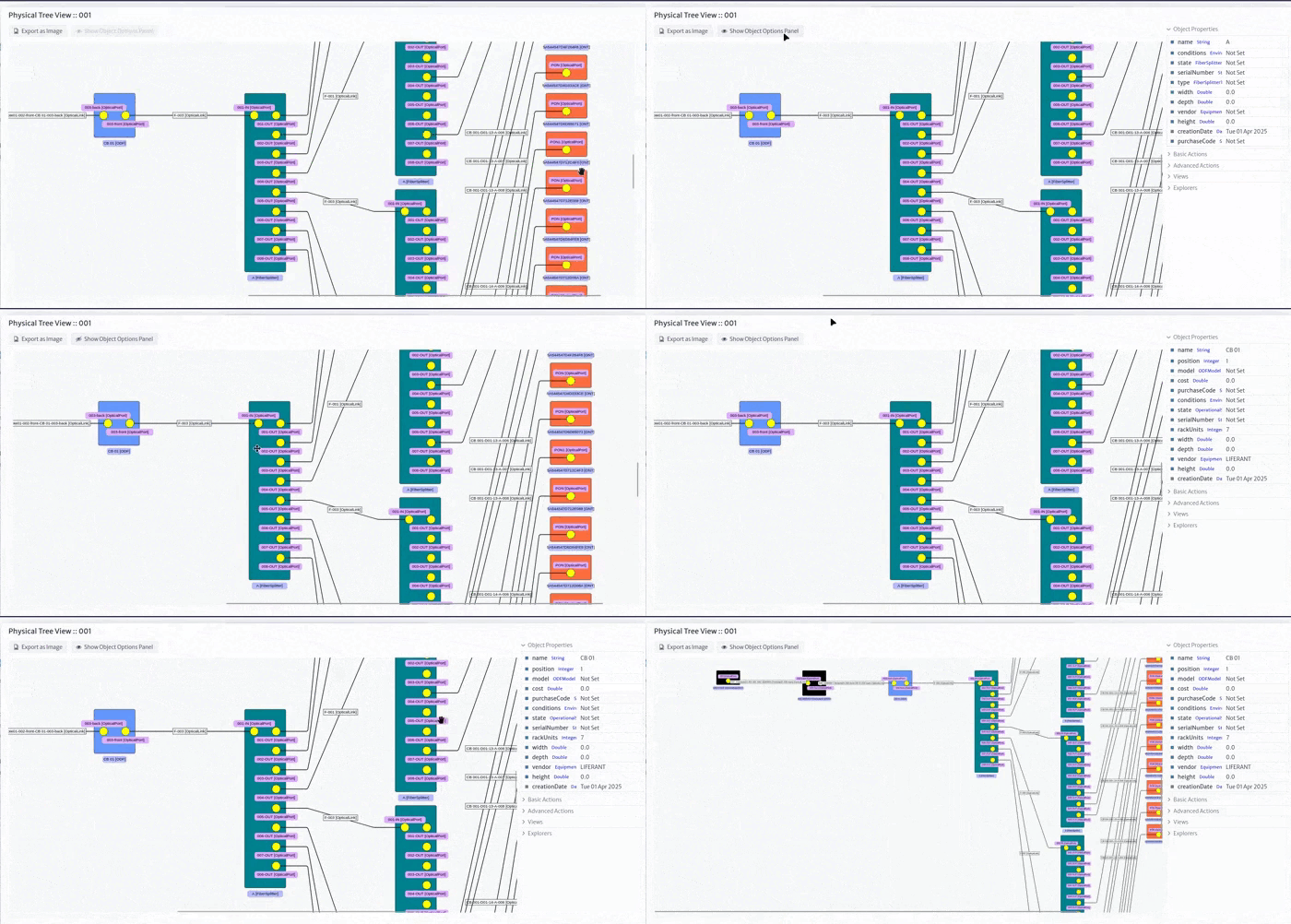
- Room & rack: capacity, occupancy, and connectivity.
- Physical paths: connections for troubleshooting and planning.
- Geographic map: indoor/outdoor nodes and links in a geospatial view.
- Explorer & search: relationships, actions, and operational context.
Architecture & APIs
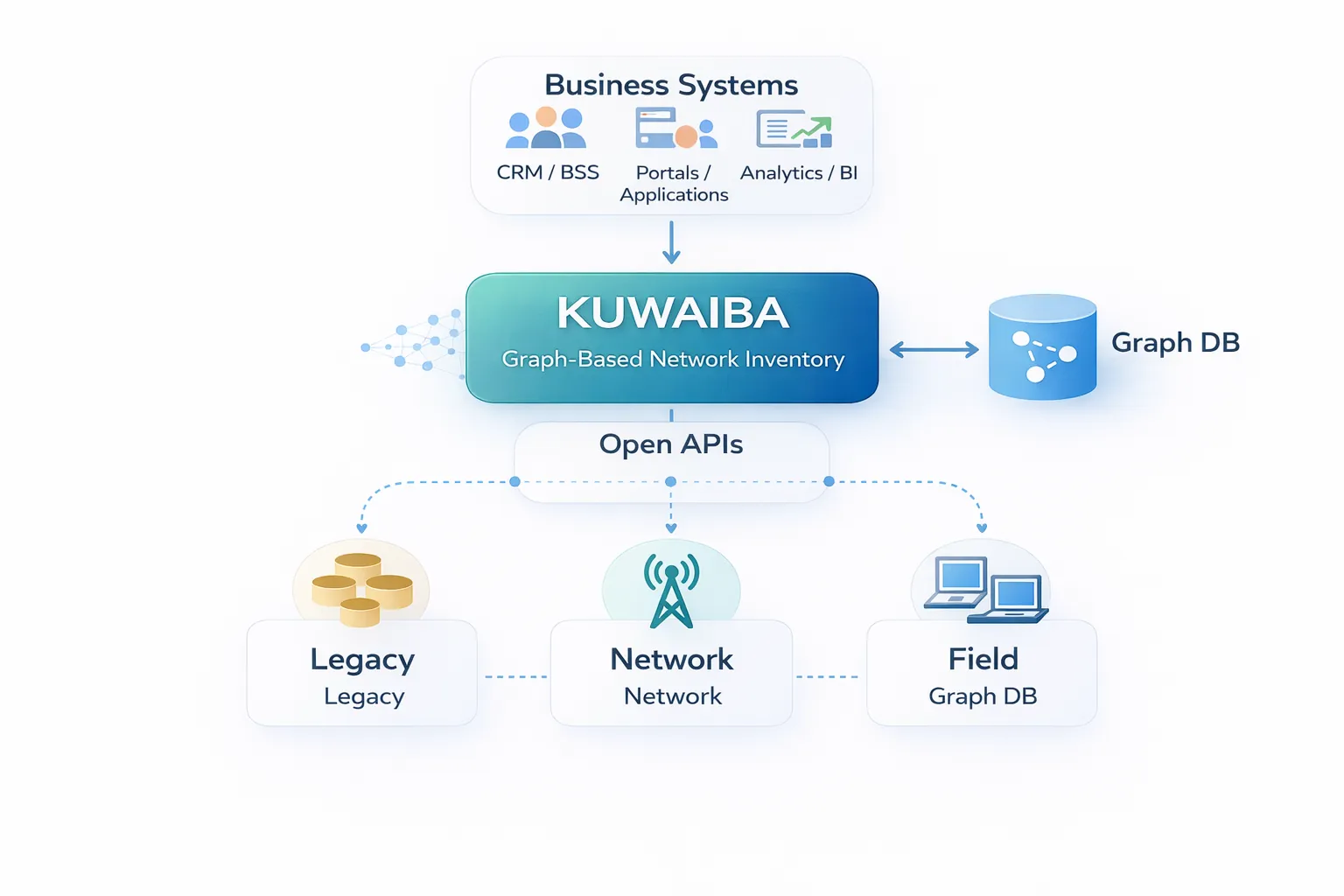
A modular, interoperable, and high-performance platform.
- Modular and extensible core with integration by modules.
- Persistence API on a graph database (Neo4j).
- NB/SB interfaces: REST/SOAP and a high-performance channel (REST/STOMP).
- Sync Framework (Southbound) with agents and synchronization providers.
- Messaging for high volume and high transactionality.
Deployment & Performance
- Environments: On-prem, VM, or containers. Configurable to your IT policies.
- OS & DB: Debian 12 recommended (RHEL/Windows supported). Database: Neo4j.
- Scalability: Real cases with millions of objects and sub-second queries in typical scenarios.
- High availability: HA/cluster options, session replication, and scheduled backup schemes.
Business Model
Open Source
No license fees and full transparency.
Low TCO
Cost-efficient operations with enterprise-grade capability.
End-to-End Services
Integration, support, and customization from OSS specialists.
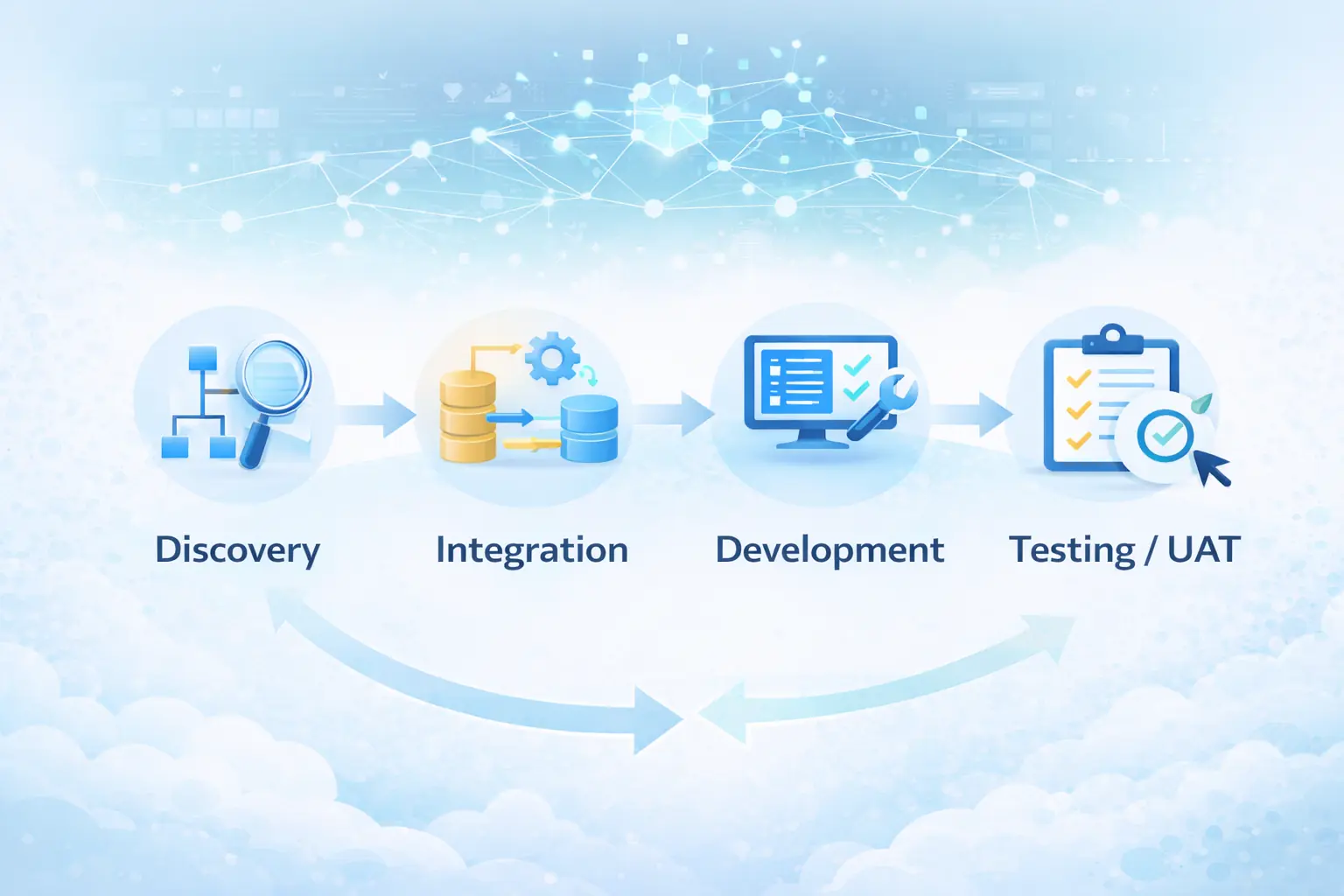
Implementation — Four Stages
- Discovery: Agreed data model, story prioritization, and integration plan.
- Integration: NB/SB connectors and initial loads to put data in motion.
- Development: Customizations and automations aligned to your processes.
- Testing / UAT: Joint validation, fine-tuning, and readiness for operations.
Take Back Control of Your Data and Applications
Let’s discuss your operation and show Kuwaiba in action.
Frequently Asked Questions
How does it integrate with my OSS/BSS?
Through open NB/SB APIs, sync agents, and modular connectors.
Which OS and database are supported?
Debian 12 (recommended), RHEL, and Windows Server; database: Neo4j.
How scalable is it?
Field-proven with millions of objects and sub-second queries in typical scenarios.
Do you offer enterprise support?
Yes — consulting, integration, training, platform administration, and SLAs.